
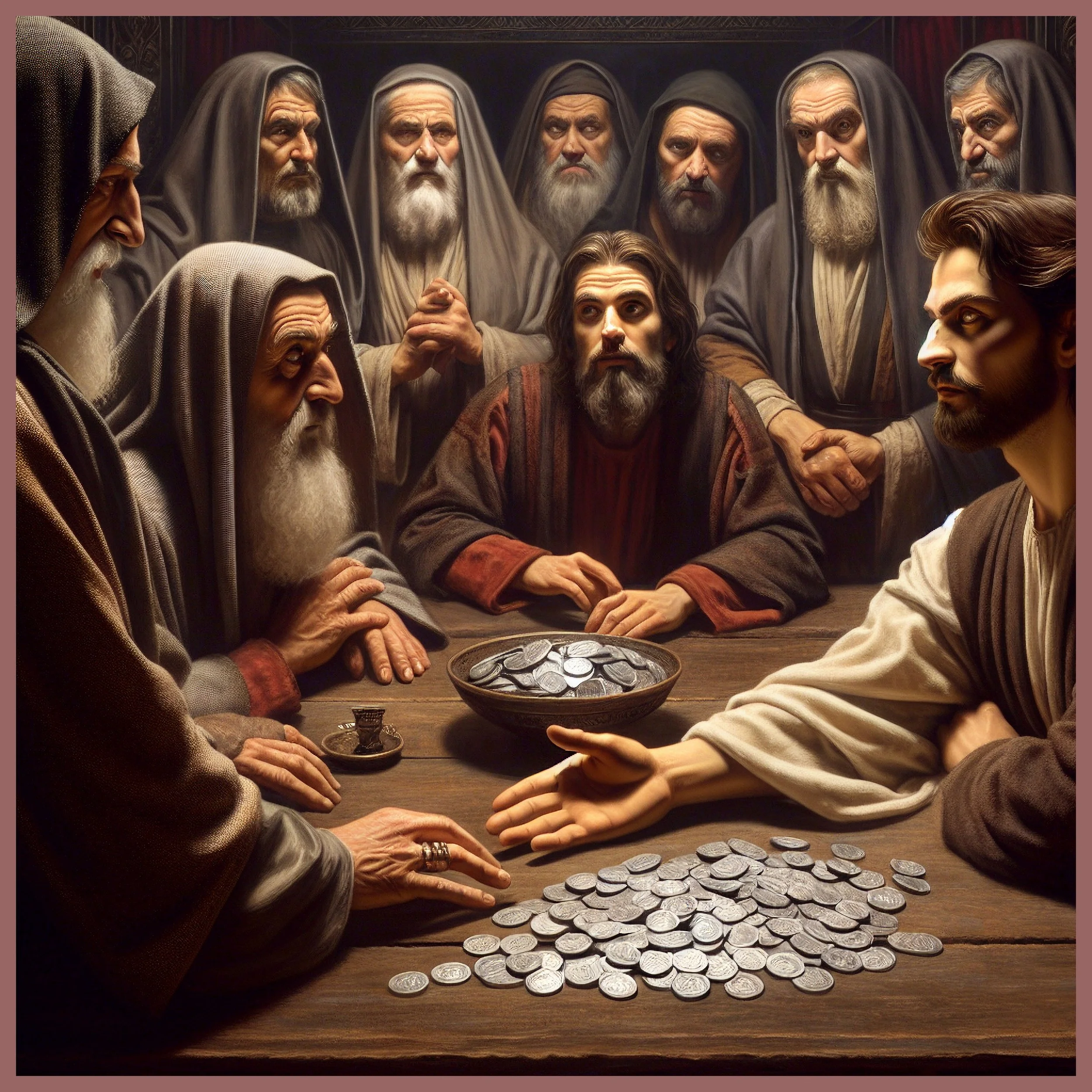
Judas is busy making a deal with the chief priests and elders he thinks will force Jesus into starting the new kingdom. Judas is thinking he will be a major player when this happens. He is selling access to Jesus for thirty silver pieces. He then shows up for the Passover meal with the rest of the disciples.
During the sacred meal, Jesus says, “One of you will betray me.” Everyone at the table is distressed by this and each begins to ask if he could possibly be that one. Jesus says it is the one who dips the bread in the common bowl with him. Well, that pretty much would have included every one of them. But then Jesus dips a piece of the broken bread and hands it to Judas.
Then, Jesus says a strange thing. He says this betrayal was prophesied and would of necessity be fulfilled, but it would be horrible for the man who did it. Judas then joins the “Is-it-I” chorus and Jesus says to him, “You said it.” Judas then goes “out into the night”, as John later told it, and, indeed, out into the darkness of night Judas goes.
Judas misses the agony of the next few hours in Gethsemane, the cup of sorrows Jesus saw there, and what was in it for Jesus to drink. Jesus’ anguish was so great that his human body was not equipped to bear the realization of what God’s son must do—to become both the victim and the victimizer of all sin from the beginning of time to the end of time—yes, to drink it all. His very pores hemorrhaged great drops of blood at the immensity of this eternal realization.
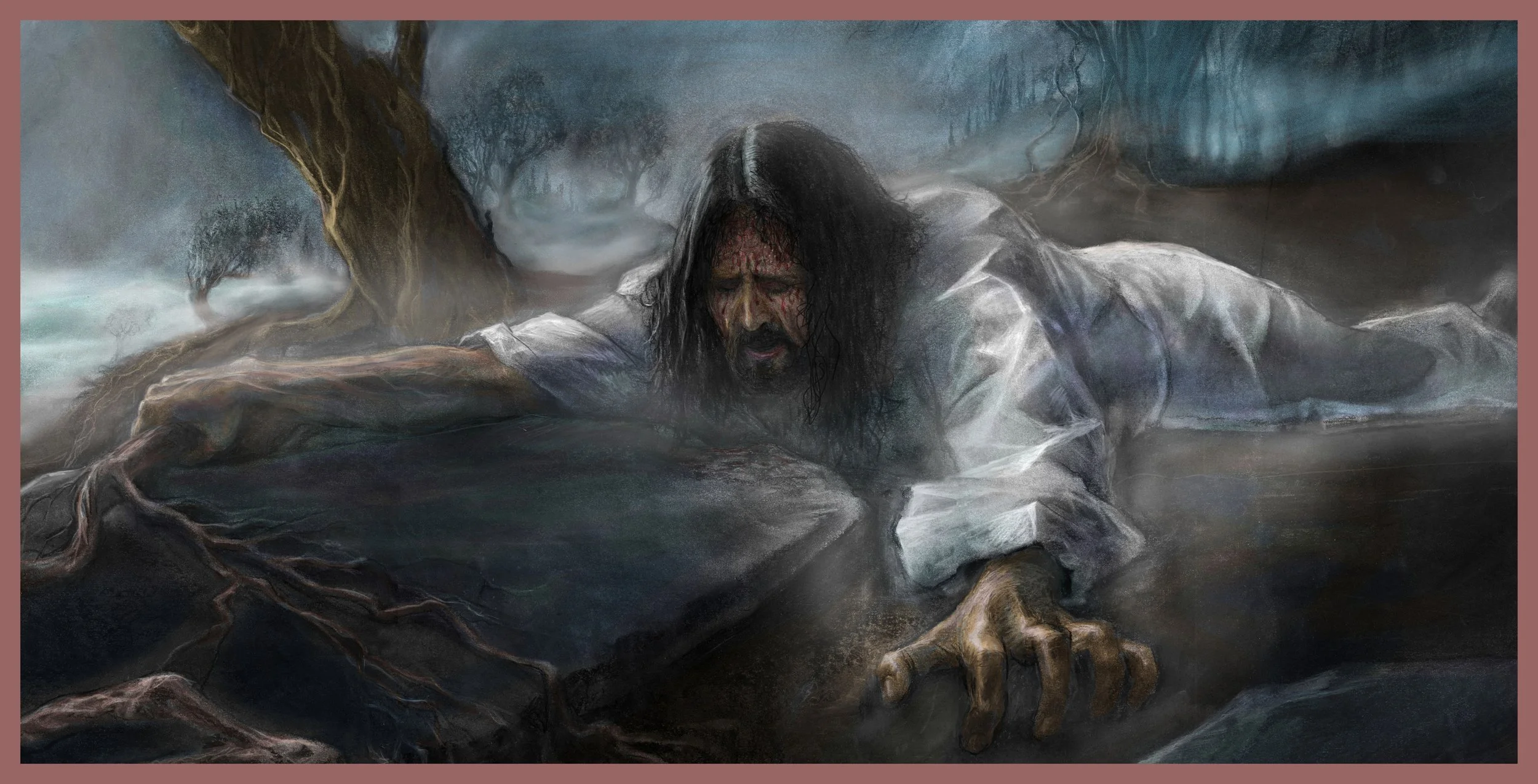
“Oh, remove this cup from me,” Jesus pleaded with his Father, but the cup was not removed, and he would have to drink it.
The sleeping disciples were most likely awakened by the approaching sound of the mob that came with Judas and the chief priests and elders to seize Jesus. Judas identifies him by a prearranged sign—“the one I kiss”. That begins the horrific chain of events that leads to the beatings, the mock crowning of the “King of the Jews” with a crown of thorns, and all sorts of cruel humiliations.
Judas, ever the literalist about the Kingdom Jesus came to build, realizes that the betrayal has gone horribly wrong. He takes his bag of silver back to chief priests and elders, and by confession, tries to relieve himself of the immense burden of guilt.
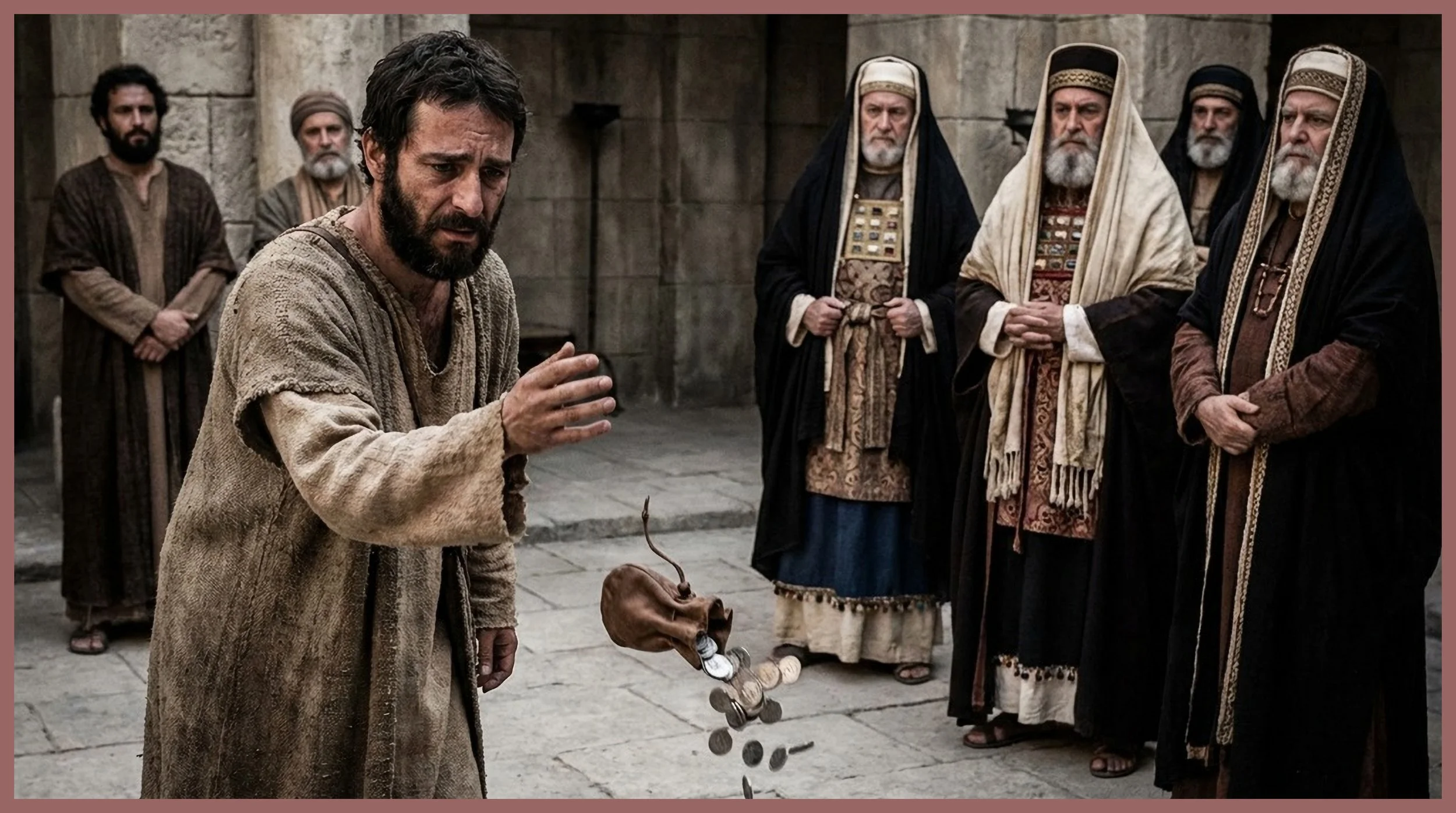
“I have betrayed innocent blood,” he cries, but their cynical response is, “That’s your problem.” Judas throws the silver down and runs out and hangs himself.
These same law-keepers who allowed the porch of the temple that was to be reserved for the poor, the strangers, and the visiting pilgrims, to be filled with crooks—these same priests and elders who were so concerned about Jesus “healing on the Sabbath” and legitimizing the story of the lepers being made whole—these same law-keepers had another meeting. This time it is to decide what to do with the 30 pieces of silver Judas has thrown down at their feet.

“We can’t put this into our treasury,” they say to each other, “because it is blood money, and that would be against our laws.” They decide to use it to buy a useless piece of land that potters used to discard the chards of shattered pottery. The same hypocrites that cheated the poor and usurped their welcoming porch are now concerned about keeping the law prohibiting blood money from being used in their treasury. And they decide to use this useless field to “bury the poor”.
But broken pottery eventually weathers back into soil, clay soil for making new pottery. And on a hill not so far away, a Potter on a cross is making provision for shaping shattered vessels into something beautifully brand new.
