
In response to the last blog, “Don’t Believe Everything You See”, I received the following piece from our friend Andy Andrews. I thought I should share it with you to continue the conversation about A.I. and its effects on our children and young people.
“The conversation concerning artificial intelligence in schools is usually about the possibility of cheating. Did I say, ‘Possibility?’ Anyway, we get that. Today, teachers are trying to figure out what is real, parents are trying to figure out what is allowed, and the kids–just like every kid who ever lived–the kids are trying to figure out what they can get away with.
Still, cheating is not nearly the biggest problem. The deeper issue is what kind of adults our children are becoming. So the real challenge isn’t cheating. Instead, it is the illusion of having ‘learned’.
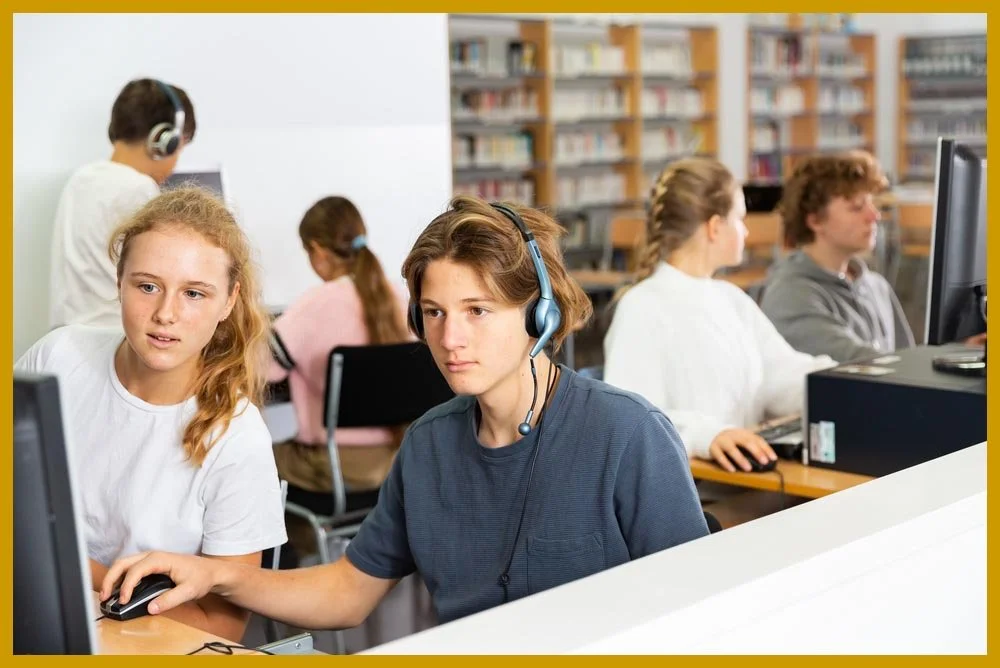
Remember English class? Do you remember being required to turn in a 300-word paper on the Magna Carta or the themes evident in Canterbury Tales? And you had to do it with a fountain pen, handwritten in cursive? Remember just trying to start? Just trying to put one coherent sentence on the page with barely half an idea of what you wanted to say? There was no computer program to ask, no shortcut to take, no machine to make you sound smarter than you were. There was only the work of ‘thinking’.
At the time, I had no idea how I’d use any of it in real life, but as it turns out, I use it every day. Writing those dull essays forced me to learn how to harness my imagination into usable solutions. Those essays allowed me to sit in confusion until I made a sentence appear. We were learning to organize, revise, choose pathways, and keep going until something inside us became clearer. The paper, I see now, was not the point. The person being formed by the paper was the point.
When a child uses A.I. to produce an answer without practicing the thinking normally required to produce an answer, he or she is not just using a new educational tool. Without active ‘thinking’, nothing is learned. A.I. seems to produce the illusion of education—that is the appearance of ability without any authentic development of that ability. A student can now turn in a grammatically correct essay without ever having learned how to write one. The parents see the grade and are relieved. The teacher senses something is off, can’t prove it, and doesn’t want the fight it would produce if she could. Meanwhile, the student learns a dangerous lesson: I can skip the struggle and still appear to be successful.

A.I. is a tool, and since a tool cannot be an enemy, A.I. is not an enemy. A.I. can translate, explain, organize, and help a struggling student see what he could not see before. But the first step must still be to THINK: What do I know? What have I tried? After using A.I., this question should be applied: Could I do this again without A.I.? Did my use of A.I. strengthen who I am, or did I just get a fast result I’ll never remember?
Our children will live in a world shaped by A.I. They should learn to use it. But they must not confuse ‘using a powerful tool’ with ‘becoming a capable person’. Our goal should not necessarily be to keep children away from A.I. The goal is to make sure A.I. helps them actually become better—not merely appear more capable than they really are.

So…think with me here: what enables a child’s reliance on A.I.? Time alone with their screens. What counteracts time alone with their screens? Conversations. We did not get to this crisis in thinking just because of A.I. Our nation’s children have been veering toward this cliff for two generations. As the age of videos and headphones emerged, conversations between adults and young people began to diminish and the Great Separation gained momentum.
Children participating in a real conversation at dinner about real issues became a thing of the past with the advent of I-pads and cell phones. Now, even the adults are on their devices at dinner and the children are, too. Even an after-dinner movie separates the family with large screen TVs in the playrooms and the adults watching a movie of their own choosing with no conversation to follow. And whoever said music was the great uniter was wrong. In the car on family trips, the kids are on their cell phones with earbuds while the adults listen to stations of their own preference.
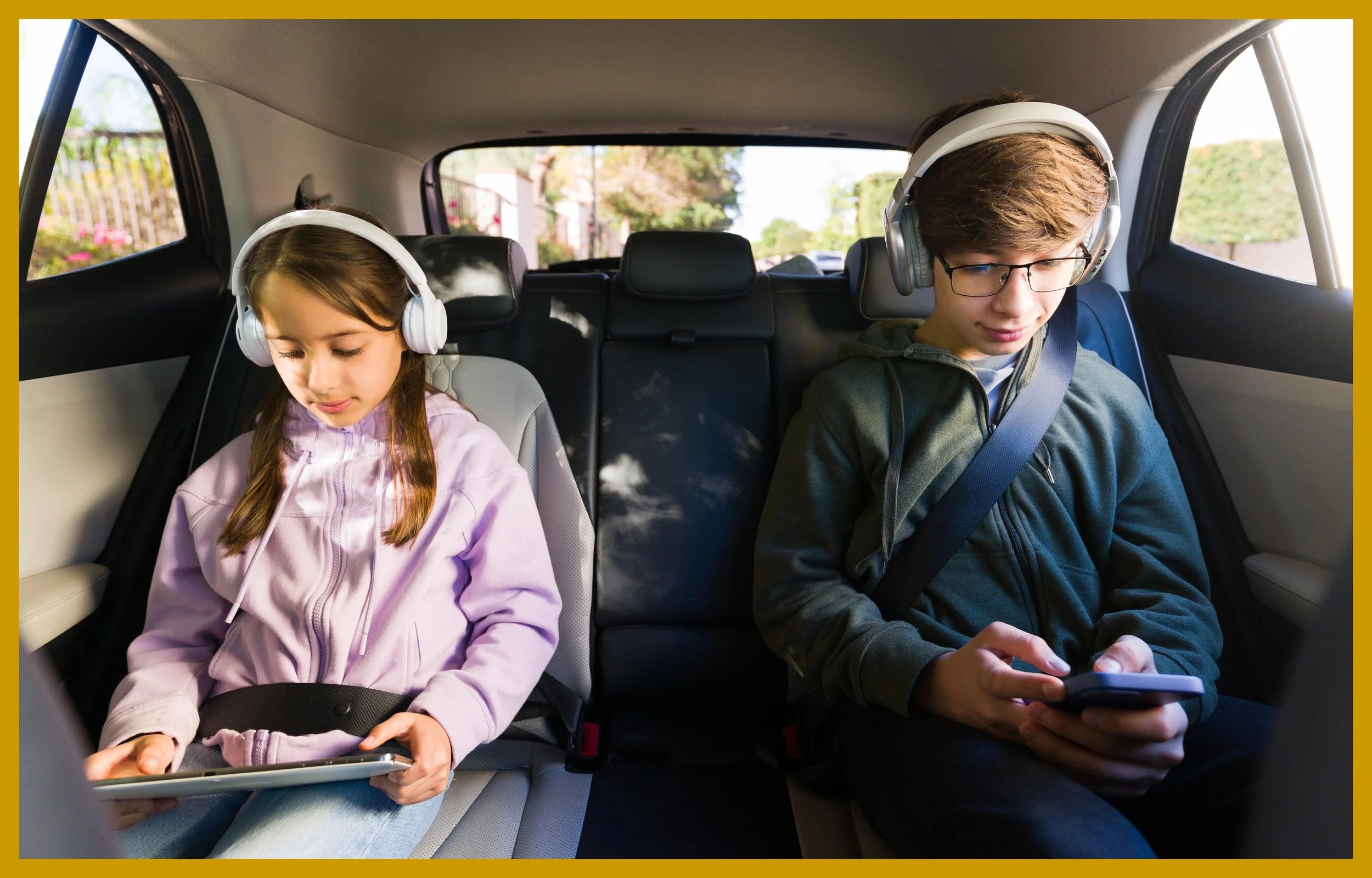
Kids used to spend the 3-hour car ride to Grandma’s in the backseat, listening to their parents discuss life. We gave them headphones and screens, which not only cut them out of the conversation--it also didn’t even allow them to listen to one.
What can a family do? One thing is WisdomHarbour.com, an inexpensive streaming service being used by schools and families to generate meaningful conversations…ones between adults and young people. Wisdom Harbour’s mission is to create America’s next greatest generation. This unique vehicle is being used as a connecting point of conversation between parents and their teenagers, parents and teachers, as well as students and all the adults in their town. Becoming a part of placing Wisdom Harbour in your local or state school system is one way you can have a direct effect on the culture that makes America whatever it turns out to be from here.
How else can you help? Can wise people somehow convince students that the struggle that intelligence requires is worth it… even when a tool exists that can remove that struggle in seconds?
For the sake of the adult your child will become, we must make sure that answer is ‘yes’.”
